Thailand's 2026 Nominee Crackdown: What Foreign Property Ownership in Thailand Means for Owners in Bangkok, Pattaya, Phuket, Koh Phangan and Koh Samui
 Living in another country is a privilege, not a right — and that privilege comes with an obligation to follow that country's laws, even when a shortcut looks tempting or "everyone else is doing it." Thailand has welcomed foreign residents and investors for decades, but the Thailand nominee crackdown 2026 has made one thing unmistakably clear: the laws governing foreign property ownership in Thailand are not optional guidelines. They are being enforced strictly, making it essential to understand how to buy property in Thailand legally.
For years, "nominee" arrangements — a Thai shareholder holding shares on paper while a foreign buyer retained actual control — were treated as an open secret in Thailand's property market. That era is over. The current push against illegal land ownership in Thailand marks a historic shift. Thai authorities have moved from occasional administrative warnings to a coordinated, nationwide enforcement campaign, backed by new technology, new legislation, and criminal-level penalties.
This article isn't meant to alarm you — it's meant to inform you, so you can make decisions that respect the country you've chosen to live or invest in. It explains what has changed, where enforcement is concentrated, what the consequences look like, and what a legitimate path forward involves.
Watch: Thailand Nominee Crackdown 2026 Podcast
Prefer to listen? Watch our full discussion of what Thailand's 2026 nominee crackdown means for foreign property owners, how enforcement is changing, and what legal alternatives are available.
From Warnings to a Unified Crackdown
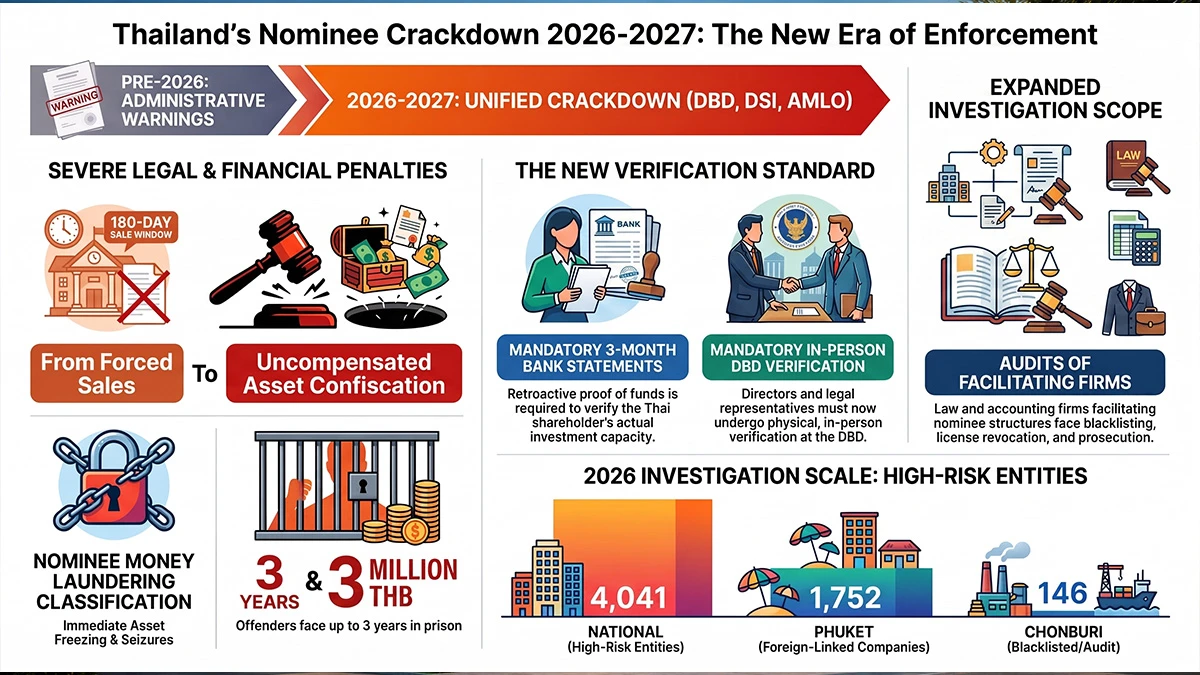
Until recently, nominee structures were mostly a compliance risk you could quietly ignore. Since 2026, that risk has become the focus of a comprehensive property compliance audit campaign across the country. Five government bodies are now working in coordination: the Department of Business Development (DBD), the Department of Land, the Department of Special Investigation (DSI), the Anti-Money Laundering Office (AMLO), and — in sensitive provincial cases — the Internal Security Operations Command (ISOC).
The technical backbone of this shift is a 13-digit legal entity ID system that now links the DBD's corporate database directly to the Department of Land's title records in real time, as confirmed in the DBD's own announcement on its financial audit protocols and new DBD nominee checks. In practical terms, a foreign-linked company buying land can no longer be evaluated on paperwork alone — its ownership history, shareholder finances, and business activity are cross-checked automatically as part of an ultimate beneficial owner (UBO) check.
The scale of the resulting audit is significant. Out of roughly 203,000 corporate records reviewed across all 77 provinces, 4,041 companies have been flagged as high-risk and are now under deeper investigation. The DBD has already moved 11,234 companies to "defunct" status to stop them being used as dormant shells. AMLO, for its part, has executed asset seizures exceeding 10 billion THB tied to nominee structures. This is a systemic effort to close the gap between who legally owns Thai land and who actually controls it — and it reflects Thailand's right, like any sovereign nation, to decide how land is owned and enforce Thai property law compliance.
How Enforcement Looks in Each Region
Bangkok: The Luxury Villa Market Under the Microscope

In the capital, the Bangkok luxury villa crackdown has focused heavily on the high-end residential market, particularly in prime developments like Krungthep Kreetha and Pattanakarn. Authorities have targeted 33 luxury villas worth a combined 1.27 billion THB, most held through the classic "51% Thai / 49% foreign" company structure — a model originally designed under the Foreign Business Act to facilitate industrial investment after the 1997 financial crisis, now used well outside its intended purpose.
What is drawing attention isn't the structure itself, since 49% foreign ownership of a company is legal. It's the pattern behind it: homes priced at 200–400 million THB held by companies with no operational revenue and no tax filings. A lack of tax filings has effectively become the single biggest trigger for a raid — it signals that the "Thai company" behind the property isn't a real business, just a holding vehicle. If you're looking at legitimate ownership options in the capital, browsing condos for sale in Bangkok or houses for sale through properly structured channels remains straightforward and fully compliant.
Pattaya and Chonburi: The "Super Nominee" Problem
In Chonburi province, the focus shifted from individual buyers to the professionals who make nominee structures possible at scale. A coordinated operation known as "Operation Lightning Strike," run March 18–20, 2026, exposed what regulators now call "Super Nominees" — single Thai individuals listed as majority shareholders across more than 100 companies, with combined investment values exceeding 300 million THB, as detailed by Pattaya Mail's coverage of the enforcement drive.
The result: 146 Chonburi-based companies blacklisted, and business licenses revoked for several law and accounting firms that had been facilitating these arrangements. AMLO is now amending legislation to require lawyers and accountants to report suspicious transactions directly, and the DBD is coordinating with the Lawyers Council of Thailand and the Federation of Accounting Professions — a body overseeing more than 80,000 professionals — to close off this facilitation channel entirely.
Phuket: The Epicenter of the 2026 Crackdown
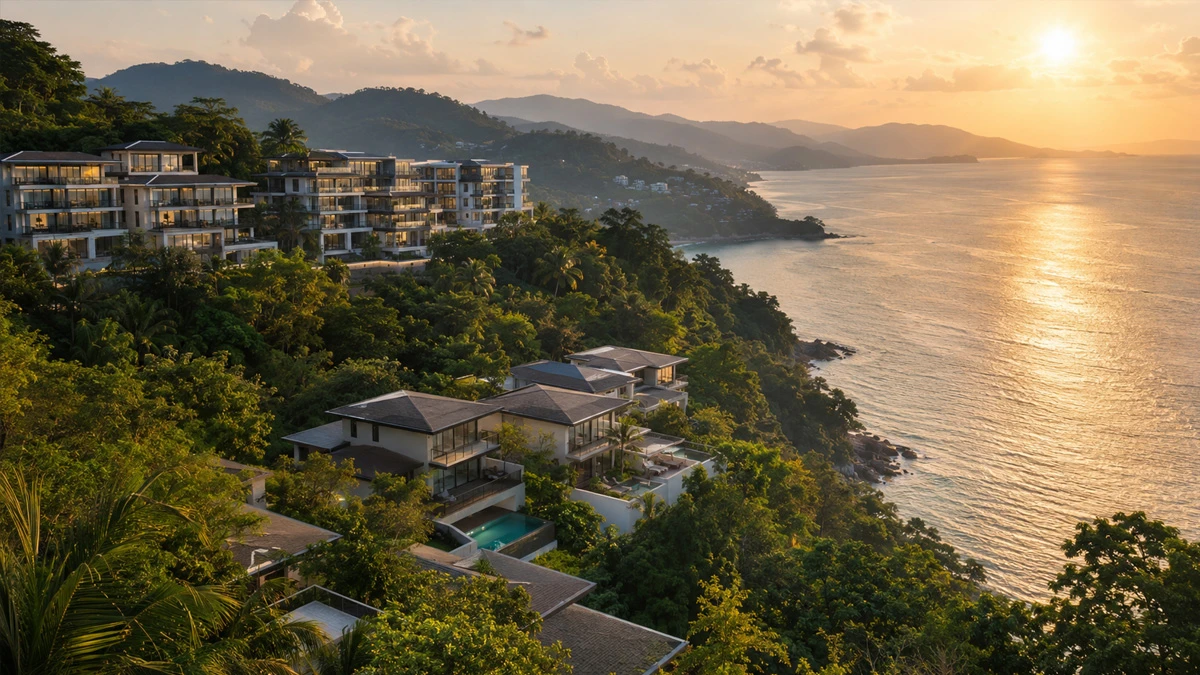
Phuket has become the most intensely scrutinized market in the country, and the trigger was a specific incident: a July 25, 2026 inspection at the Chabad Centre in Patong, where a challenge to Thai authority over the premises drew a sharp public response from the Ministry of the Interior, as reported by Nation Thailand. The resulting Patong nominee sweep drew comments from Deputy Interior Minister Polpee Suwanchawee, who stated plainly that everyone on Thai soil must comply with Thai law, and that no one has the right to claim sovereignty over Thai territory — a reminder that respecting local law isn't optional, regardless of nationality or background.
That incident opened the door to a much broader Phuket nominee investigation. Authorities uncovered an Israeli-linked network of more than 100 companies generating over 5 billion THB in annual revenue, a case further examined in the Bangkok Post's report on Phuket's nominee financial probe. To verify compliance, officials are conducting thorough UBO verification across the province. The current numbers in Phuket:
- 1,752 foreign-held companies identified
- 361 classified as high-risk nominee targets
- 140 individual "bookkeeper" shareholders identified, several holding stakes across dozens of unrelated companies
- 109 legal cases initiated, with 34 already concluded
- A roughly 50% drop in new foreign company registrations and a 20% business closure rate since the crackdown began
Investigators have also expanded into reviewing how some foreign individuals obtained Thai citizenship, checking whether citizenship itself was used as a shortcut around foreign ownership restrictions.
Koh Phangan and Koh Samui: Beyond Villas, Into Land and Schools
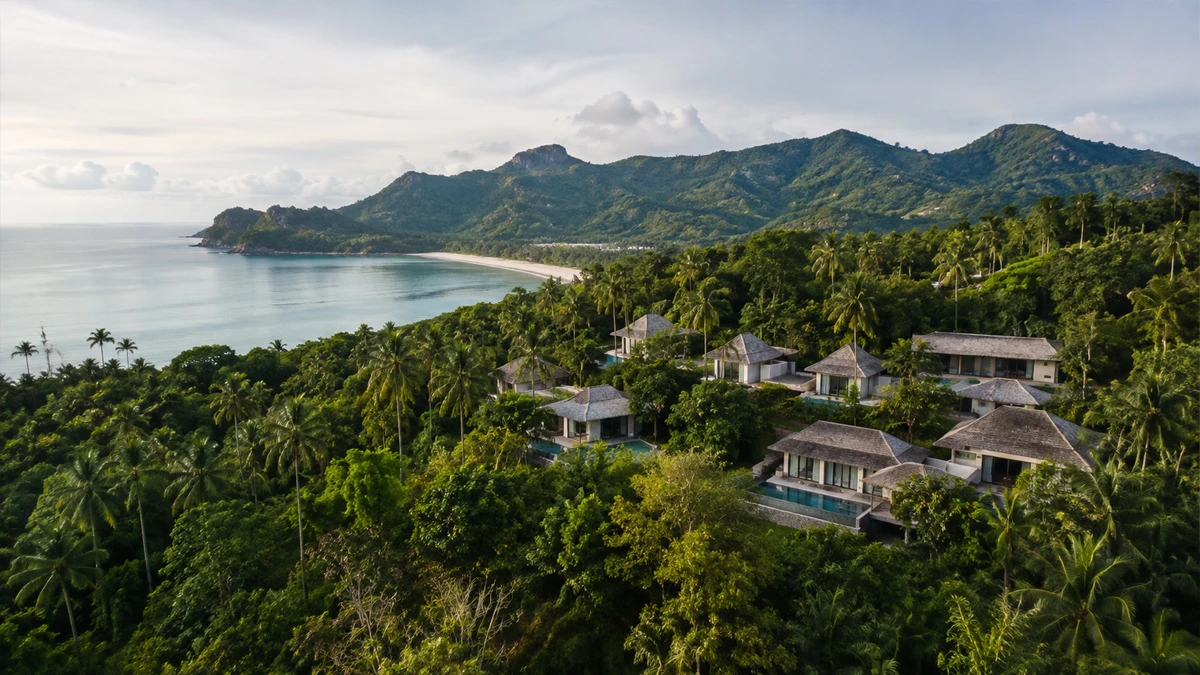
The Gulf island crackdown, now in its "Phase 2," has deployed more than 300 officers, including ISOC personnel, and has expanded well beyond tourism properties, according to Nation Thailand's coverage of the Koh Phangan operation. The Koh Phangan land raids and Koh Samui property seizures exposed a particularly troubling pattern in Phase 1: state welfare cardholders — some of the most financially vulnerable Thai citizens — being used as proxy shareholders, often without fully understanding the legal exposure they were taking on. That detail is worth sitting with: nominee structures don't just create legal risk for the foreign buyer, they can put ordinary Thai citizens in harm's way too.
Phase 2 has moved to the facilitators and the assets themselves. Two groups of findings stand out:
- Group 1: 32 companies with clear nominee structures, resulting in 22 arrests, 45 land plots (over 40 rai) seized, and an estimated 200 million THB in damages
- Group 2: 32 companies where foreign shareholders outnumber Thai ones, with 38 rai of vacant, undeveloped land currently under investigation
One case in particular illustrates how far this has gone: a raid on a yoga retreat business revealed an Israeli national as the true owner behind Thai proxies, resulting in the seizure of 7.5 rai worth 60 million THB and the discovery of an unlicensed hotel operation. Even a Canadian-linked nominee structure tied to a local school was investigated — a clear signal that no sector, including education, is considered off-limits.
Hua Hin: The Enforcement Reach Extends Further
The crackdown isn't confined to the five hubs above. In Hua Hin and Prachuap Khiri Khan, police have stepped up checks on foreign nominee businesses, with 2,081 firms carrying foreign investment under scrutiny and 2,000 entities specifically targeted — a reminder that this is a nationwide shift in enforcement posture, not a handful of isolated hotspots.
How Authorities Are Actually Catching Nominee Structures
The mechanisms behind this crackdown matter as much as the headline numbers, because they explain why "it worked before" is no longer a safe assumption.
- Mandatory financial capacity checks. As of August 1, 2026, Thai shareholders in foreign-invested companies must provide a minimum of three months of bank statements proving they had the independent financial means to pay for their shares — checked retrospectively, specifically to catch cases where the "Thai" shareholder's funds actually came from a loan by the foreign partner.
- In-person verification. Company directors and legal representatives must now undergo physical, in-person verification at the DBD. The days of registering a company entirely through paperwork and a proxy are ending.
- Real-time data matching. The 13-digit ID integration between the DBD and Department of Land means ownership anomalies are now flagged automatically, rather than discovered years later during a resale or dispute.
- Dormant company flags. Companies holding land assets but reporting zero operational revenue or inconsistent tax filings are treated as a primary red flag — this is what triggered many of the Bangkok luxury villa investigations.
- Enabler accountability. Perhaps the most structurally important change: the professionals who used to make nominee arrangements low-risk — lawyers, accountants, and bookkeepers — are now personally exposed. One case involved a single bookkeeper found holding shares in 212 companies worth a combined 247.57 million THB. With mandatory reporting obligations and physical verification requirements now in place for law offices, that layer of insulation is disappearing.
Government data indicates these combined measures produced a 51.05% decline in nominee-risk companies after initial implementation, followed by a further 65.22% decline once additional checks were introduced — a strong signal that the deterrent effect is real, not just symbolic.
What Happens If You're Caught
The consequences for nominee arrangements have escalated sharply, and the direction of travel is toward harsher, not lighter, enforcement.
| Penalty Category | Current Framework | Proposed Escalation |
|---|---|---|
| Asset penalty | Compulsory sale within 180 days to 1 year | Absolute confiscation, without compensation |
| Fines (Land Code) | 20,000–50,000 THB | Up to 3,000,000 THB |
| Fines (Foreign Business Act) | 100,000–1,000,000 THB | Enhanced daily fines for continued non-compliance |
| Criminal liability | 2–3 years imprisonment | AMLO-led financial asset freezing |
Nominee arrangements are also now being classified under money laundering provisions in some cases, which allows for immediate asset freezing ahead of any court ruling. Beyond financial and criminal exposure, foreign owners found in violation face immigration consequences: visa annulment, deportation, and permanent blacklisting from future entry to Thailand.
The compulsory-sale model — where you had up to a year to arrange a sale — is being phased out in favor of outright confiscation. Waiting is no longer a viable strategy, and it was never a sustainable way to build a life in a country whose laws you intend to respect.
Recommendations for Buyers: Staying on the Right Side of Thai Law
If you're buying property in Thailand now, or already own property here, the operating principle for 2026 is straightforward: your ownership structure needs to survive an audit, not just look reasonable at signing — and more importantly, it needs to genuinely respect the legal framework of the country you've chosen to call home.
- Understand what's actually legal. Foreigners can legally own condominium units outright (up to 49% of a building's total floor area under the Condominium Act), lease land long-term, or hold a minority stake in a genuine Thai company with real Thai capital and control. What's illegal is using a Thai company or individual as a front while retaining effective control yourself.
- If you're using a company structure, make sure it's a real business. Zero revenue, no tax filings, and a Thai shareholder who can't independently show the funds to have bought their shares are now the exact profile authorities are trained to flag.
- Don't rely on informal side agreements. Powers of attorney, undisclosed loan arrangements, or verbal promises to "hold" shares are precisely the pattern regulators are now equipped to detect through bank records and cross-agency data matching.
- For long-term occupancy without ownership risk, consider registered leaseholds or Sap-Ing-Sith. These are legitimate, recognized tenure models under Thai law that give you a secure, registered right to occupy property — without the legal exposure of disguised ownership.
- Work with legal counsel who reviews the full structure, not just the sale contract. A conveyancing lawyer checking a title deed is not the same as counsel who verifies whether the underlying corporate structure would survive DBD or AMLO scrutiny.
- If you're already in a nominee arrangement, don't wait for an audit to force the issue. Voluntary correction, on your own timeline, is a fundamentally different position than being caught mid-investigation — and it's the only path that genuinely aligns with respecting the country's laws rather than testing them.
If You're Already in a Nominee Structure: A Legal Way Out
For owners currently holding property through a nominee company, the good news is that a structured, fully legal exit path exists — and it doesn't require giving up your ability to live in the property.
CondoDee has spent 10 years working with foreign property owners in Bangkok and Phuket. Alongside a top-tier Bangkok legal firm, we now help clients transition out of nominee structures through our property remediation model, facilitating voluntary land divestment while securing occupancy rights.
- Genuine Thai Titling — A real Thai-owned property investment group takes full legal and beneficial ownership of the property, along with the actual capital and commercial risk. This isn't another proxy arrangement; it's a real transfer to a real owner.
- Registered Occupancy — In exchange, you exit the risky corporate structure entirely and receive a registered leasehold or a registered Sap-Ing-Sith (occupancy right), recorded directly via land title registration at the Land Office — not a private promise, but a legally enforceable right.
- Secured Financing — Any funds you contribute toward the transaction are documented as an ordinary, clean loan agreement, never as disguised equity or hidden control.
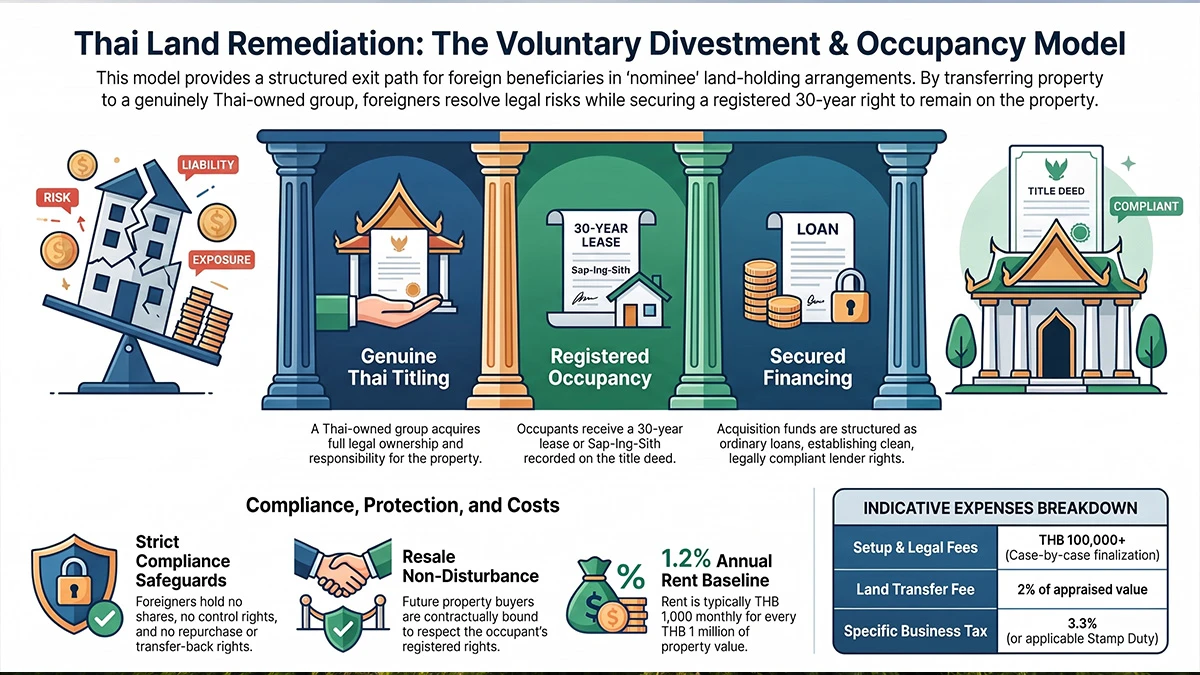
The model is built with strict safeguards on both sides: you hold no shares, no voting rights, and no informal repurchase or transfer-back arrangement — the exact features that create nominee liability in the first place. In return, you get a formal non-disturbance undertaking, meaning your right to occupy the property is protected even if it's later resold; any future buyer must acquire it subject to your 30-year lease.
As a general point of reference, clients typically see an ongoing occupancy cost of roughly 1.2% of property value annually (about THB 1,000 per month per THB 1 million of value), setup and legal fees from approximately THB 100,000, and standard official transfer costs (typically a 2% land transfer fee plus 3.3% specific business tax or applicable stamp duty). These are starting reference points, not fixed quotes — every case is structured individually around your property's history and your goals.
If you're exploring legitimate property investment in Thailand going forward rather than remediation, our listings of condos, houses, and luxury properties for sale are all structured within the legal framework described above. You can also read more on our FAQs page or browse other articles on CondoDee News.
The Bottom Line
The market practice that once made nominee arrangements feel routine no longer exists. What's changed in 2026 isn't just the penalties — it's the detection. Real-time data matching, mandatory financial verification, and accountability for the lawyers and accountants who used to make these structures feel safe mean the gap between "getting away with it" and "getting caught" has narrowed dramatically.
More than that, though, this is ultimately about respect. Choosing to live, invest, or retire in Thailand is a choice to be a guest in someone else's country — and that comes with a responsibility to follow its laws as they stand, not as we might wish they were. If you're buying in Thailand, structure it properly from day one. If you already hold property through a nominee arrangement, the safest and most respectful move is addressing it voluntarily and on your own terms — not waiting to see if your company shows up on the next audit list.
If you'd like to understand how this applies to your specific situation, a short, no-obligation conversation is the fastest way to find out.
Contact CondoDee Eternal Property via
- WhatsApp at +66 62 189 9659
- Email win@condodee.com, or
- Visit condodee.com.
Sources referenced in this article:
- Nation Thailand — Phuket sweeps and the Chabad House case
- Nation Thailand — DBD financial audit protocols
- Nation Thailand — Koh Phangan crackdown, Phase 2
- Bangkok Post — Phuket nominee companies face financial probe
- Hua Hin Today — Police step up checks on foreign nominee businesses
- DBD — Database purge announcement (11,234 companies)
- Khaosod — AMLO's 10 billion THB seizures and legislative reporting
- Thairath — Israeli network and 5 billion THB revenue case
- Pattaya Mail — The nominee trap 2026
This article is for general informational purposes and does not constitute legal advice. Property structures should be reviewed individually with qualified Thai legal counsel.
ข่าวอสังหาฯ เพิ่มเติม
Thailand’s 2026 3M Property Visa