
Thai Government Investment Push: What It Means for Bangkok and Phuket Real Estate

 On 16 July 2026, the Thai government held discussions with executives and representatives from more than 40 leading European companies at Government House in Bangkok. The delegation included members of the EU-ASEAN Business Council and the European Association for Business and Commerce, with businesses represented across pharmaceuticals, healthcare, finance, banking, insurance, automotive, industry, energy, agriculture, food, technology, digital services, hotels, tourism, and consumer goods.
The meeting was important because the government used it to set out a broad economic direction rather than promote one isolated project. Its priorities included future infrastructure, digital systems, artificial intelligence, clean energy, roads, railways, ports, airports, the Eastern Economic Corridor, the Southern Economic Corridor, investment facilitation through Thailand FastPass, regulatory reform, OECD accession, and continued negotiations for a Thailand–EU Free Trade Agreement.
For investors planning to buy property in Thailand, the announcement does not prove that residential prices or rents will rise immediately. It is a policy signal, not a guaranteed property boom. The real estate impact will depend on whether the plans produce completed infrastructure, actual foreign direct investment, new employment, higher incomes, business expansion, and sustained international confidence.
Nevertheless, the direction is relevant. Residential property is rarely strengthened by one headline alone, but it can benefit when several economic forces operate together: companies invest, skilled workers relocate, transport improves, institutions become more transparent, and international trade expands. Among Thailand’s residential markets, Bangkok and Phuket are positioned to capture different parts of that growth.
Bangkok should receive the most direct benefit because it is Thailand’s principal corporate, administrative, financial, and professional-services centre. Phuket should benefit more indirectly through tourism, hospitality investment, second-home demand, retirement, remote work and the movement of internationally mobile wealth. This distinction is essential when analysing Bangkok and Phuket real estate.
Why the Government Announcement Matters to Property Investors
The government’s announcement should be understood as part of a wider investment strategy. Thailand is seeking to improve competitiveness while moving toward higher-value sectors such as semiconductors, clean energy, digital technology, artificial intelligence, life sciences, modern agriculture and advanced food production. The official Thai government statement also emphasised transport, logistics, investment facilitation, regulatory reform and deeper economic cooperation with Europe.
Separate official data reinforce the scale of this policy direction. The Thailand Board of Investment reported that investment applications exceeded THB 1 trillion in the first quarter of 2026, led by digital and electronics projects connected to artificial intelligence, followed by clean energy, agriculture and food processing, logistics and automotive investment. Applications are not the same as completed projects, but they show where capital is being proposed and which industries are receiving attention.
For property investors, the question is not whether national investment automatically raises every home price. It does not. The more useful question is which locations, building types and ownership structures are most likely to benefit if Thailand successfully converts policy into economic activity.
1. Foreign Investment Can Create New Housing Demand
The clearest channel from foreign investment to residential property is employment. New factories, regional offices, data centres, healthcare businesses, financial operations and technology projects require managers, engineers, consultants, researchers, lawyers, accountants, and support staff. Some roles are filled locally; others bring expatriate specialists and internationally mobile executives.
Bangkok is the natural residential base for much of this demand. Even when an industrial or technology investment is located outside the central city, senior staff may prefer Bangkok because of its international schools, hospitals, transport connections, professional services and established expatriate districts. This can support demand for condominiums in central and transit-connected locations.
The strongest opportunities are not necessarily the newest projects or the most expensive towers. Investors should prioritise buildings with efficient layouts, reasonable common fees, established management, realistic purchase prices and clear tenant demand. Large two- and three-bedroom units may appeal to families, while compact one-bedroom units can offer broader tenant liquidity in the right location.
CondoDee’s current selection of condos for sale in Bangkok allows buyers to compare both newer developments and established resale projects. Resale units can sometimes offer larger floor areas, lower prices per square metre and more transparent operating histories than newly launched developments.
Phuket’s foreign-investment effect is different. The island is not Thailand’s main corporate headquarters market. Its demand is more closely linked to tourism, hospitality, wellness, international education, marine activity, second homes and lifestyle relocation. Stronger European business ties may support the island through additional tourism, hospitality capital and wealthy individuals who use Phuket as a seasonal or permanent base.
This makes Phuket particularly relevant for villas, resort condominiums and professionally managed luxury residences. However, demand is highly location-specific. A successful property in Bang Tao, Laguna, Kamala, or another established destination does not mean every inland or peripheral project will perform equally well.
2. Infrastructure Can Improve Accessibility and Support Property Values
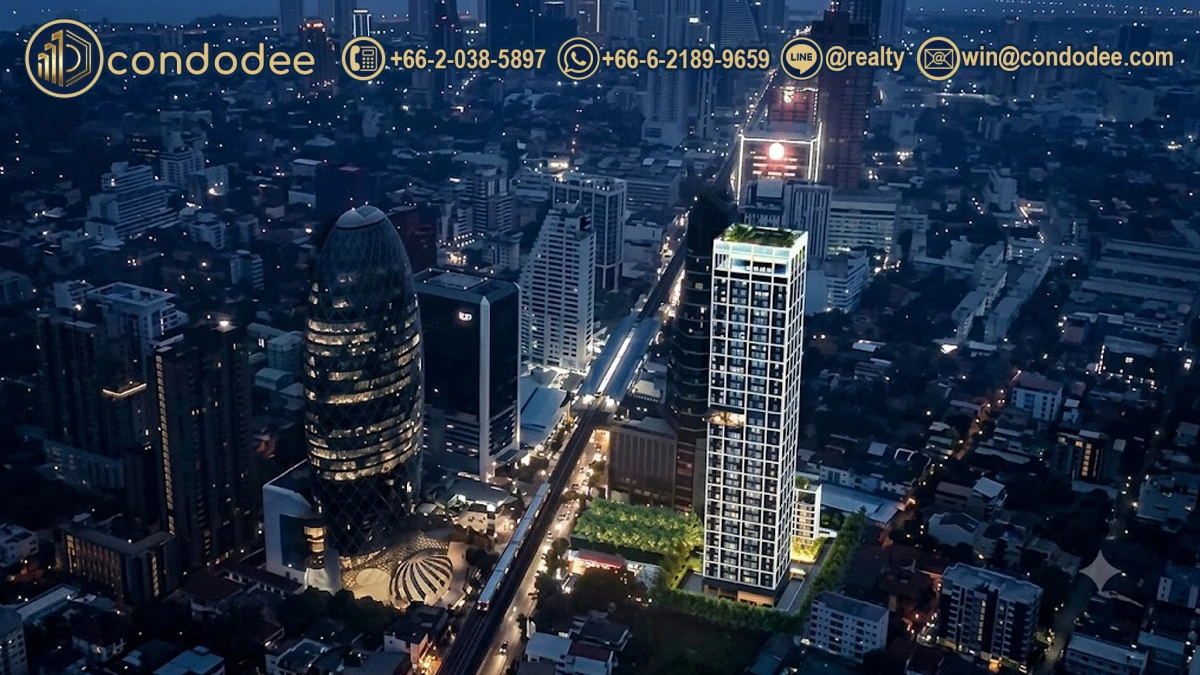
Infrastructure affects residential property by changing how easily people reach employment, schools, airports, hospitals, retail, and leisure facilities. It can expand the practical boundaries of a city, improve the attractiveness of previously inconvenient locations, and strengthen long-term demand around transport nodes.
Bangkok: Mass Transit, Roads and Urban Connectivity
Bangkok’s most visible residential infrastructure is its BTS and MRT network. Properties within a practical walking distance of an operational station generally have stronger tenant demand and resale liquidity than comparable projects requiring long road journeys. This does not mean every station-area condominium is a good investment. Oversupply, poor management, and inflated launch prices can still undermine performance.
Investors should distinguish between completed infrastructure, projects under construction, and early-stage proposals. Buying near an existing station provides immediate utility. Buying based only on a distant transport promise introduces timing and execution risk.
Bangkok’s established central districts remain relevant because they combine transport with employment, hospitals, shopping, and international education. The Sukhumvit Road property market remains one of the city’s deepest expatriate residential corridors. Within it, Asoke combines BTS and MRT access, while Ekkamai and Thonglor attract affluent Thai and international residents.
In the central business district, Silom and Sathorn properties benefit from proximity to finance, embassies, offices, and international schools. Ploenchit, Chit Lom, and Langsuan attract buyers seeking prime central locations, luxury retail, and high-end hospitality. Rama 9 has a different profile as a newer commercial district with substantial condominium supply and future-development potential.
Phuket: Airport, Roads, and Southern Connectivity
Phuket’s infrastructure equation is less dependent on urban rail and more dependent on airport capacity, roads, traffic management, utilities, marinas and access between residential areas and beaches. Because congestion can materially affect daily life, travel time is often more important than straight-line distance.
The government’s stated support for airports, roads, ports and the Southern Economic Corridor is therefore relevant to Phuket. Better regional connectivity can support visitor arrivals, longer stays and investment in hospitality and related services. The benefit to residential property will be strongest where infrastructure improvements make established destinations easier to reach without destroying the environment or lifestyle qualities that created demand in the first place.
Investors should avoid assuming that every announced road or airport plan will be completed on schedule. The investment case should still work under current conditions. Future infrastructure should be treated as potential upside, not as the only reason to purchase.
3. Regulatory Reform Can Improve Investor Confidence
International investors do not evaluate property only by price and location. They also assess legal clarity, administrative efficiency, transparency and the ease of completing transactions. The Thai government has linked its investment strategy to Thailand FastPass, regulatory simplification and the review of thousands of outdated laws.
These measures are primarily designed to improve the business environment, not to rewrite foreign property-ownership rules. Their residential impact is therefore indirect. If companies can establish operations more easily and skilled professionals can relocate with fewer administrative obstacles, housing demand may increase. Better institutional standards can also reduce the country-risk discount applied by international investors.
Thailand’s OECD accession process is relevant in this context. The OECD confirmed that Thailand’s accession roadmap was adopted in 2024 and that detailed technical dialogue covers areas including investment climate, financial markets and regional development. Accession is a demanding multi-year process rather than an immediate status change, but the review itself encourages comparison with international standards.
Property investors should interpret this cautiously. OECD accession would not automatically remove foreign land-ownership restrictions, guarantee currency stability or eliminate legal risk. It may, however, support better governance, more predictable institutions and stronger confidence among multinational companies if reforms are implemented effectively.
4. Thailand–EU Trade Integration May Deepen Business and Wealth Flows
The European Union and Thailand relaunched negotiations for a modern Free Trade Agreement in 2023. The official European Commission trade page confirms that negotiations are intended to improve market access, trade and investment while incorporating sustainability considerations.
Thailand is already an important European investment destination in Southeast Asia. According to the European Commission’s Thailand trade profile, European outward foreign direct investment stock in Thailand reached EUR 24.1 billion in 2024, while two-way services trade reached EUR 13.9 billion.
An eventual FTA could reduce barriers and make Thailand more attractive as a base for European companies serving Southeast Asia. The residential effect would come through additional business activity, employment, executive relocation and confidence—not through the trade agreement directly.
Bangkok would likely capture the largest share because it hosts corporate offices, banks, embassies, international legal firms, healthcare providers and professional services. Demand could strengthen in established expatriate and executive districts, particularly for well-managed properties near transport and international schools.
Phuket may benefit from stronger tourism and lifestyle links with Europe. European buyers already form an important part of the island’s international market. Greater business integration, improved air connectivity and continued hospitality investment may reinforce demand for second homes, villas and managed residences. However, this demand can be affected by currency movements, European economic conditions and geopolitical events.
5. High-Value Industries Can Raise the Quality of Residential Demand
Thailand’s strategy is not limited to attracting more investment; it aims to attract more sophisticated investment. Artificial intelligence, digital infrastructure, semiconductors, life sciences, clean energy, and advanced manufacturing generally require skilled employees and internationally experienced management.
This matters because higher-income professionals tend to demand more than basic accommodation. They may prioritise modern buildings, reliable internet, workspace, privacy, international-standard security, energy efficiency, professional management and access to transport, healthcare, and education.
In Bangkok, this could support luxury and upper-mid-market condominiums, but investors should not confuse premium demand with unlimited pricing power. Corporate housing budgets are disciplined, and tenants compare multiple projects. A good investment requires a purchase price that remains sensible relative to achievable rent.
Properties with distinctive and practical characteristics can be more defensible than generic units. Examples include large residential units, pet-friendly properties, renovated homes and units near mass transit. These categories address identifiable buyer or tenant needs rather than relying only on branding.
In Phuket, high-income remote professionals, entrepreneurs and international families may support demand for larger homes, private outdoor space, international schools, healthcare and lifestyle infrastructure. The island’s strongest projects increasingly function as residential communities rather than short-stay holiday developments.
How Bangkok Residential Property May Benefit
Bangkok has the strongest direct connection to the government’s investment strategy. It concentrates on the institutions, services, and employment that international businesses require. If foreign investment expands, Bangkok should capture demand from executives, professionals, local employees, and service providers.
The likely beneficiaries are not all Bangkok properties equally. The strongest segments should include well-located condominiums near operational mass transit, buildings close to established employment centres, family-sized residences near international schools, and professionally managed luxury projects.
Prime central property can also function as a capital-preservation asset for regional buyers. However, Bangkok has a significant supply, and many projects compete for the same tenants. Investors should examine actual rents, vacancy, common fees, building age, maintenance standards, and resale competition before buying.
Price per square metre alone is insufficient. A cheaper unit may have a weak layout, poor access, or major renovation requirements. An expensive unit may be difficult to resell if its price reflects branding rather than sustainable demand. Buyers should compare the total acquisition cost with the realistic rent and expected holding expenses.
Investors seeking quality rather than maximum speculation can review CondoDee’s selection of luxury properties for sale, including established resale assets and newer developments. Buyers focused on immediate income may also examine properties sold with tenants, while recognising that lease terms, tenant quality, and rent level must be checked carefully.
How Phuket Residential Property May Benefit
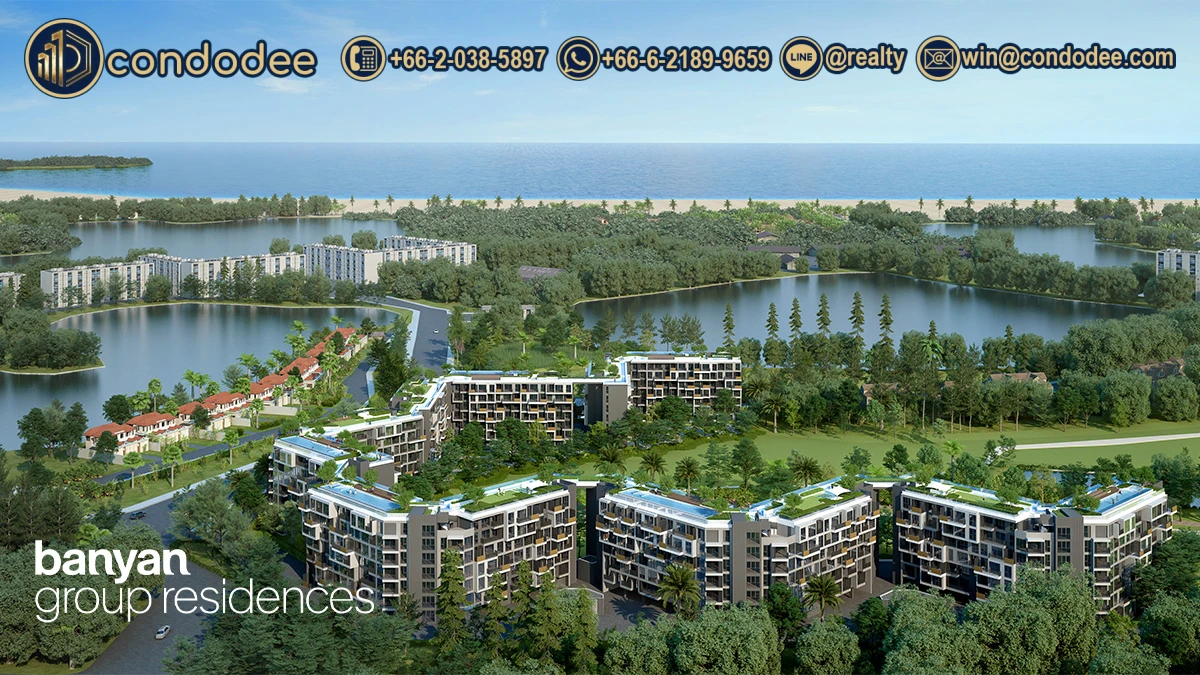
Phuket’s potential comes from a different combination of drivers: tourism, second-home ownership, international families, retirement, hospitality investment, and lifestyle migration. The island has evolved from a seasonal resort into a more complete residential market with international schools, private hospitals, marinas, restaurants, wellness facilities, and year-round communities.
The strongest demand is concentrated in established locations with proven infrastructure. Buyers should evaluate access to beaches, schools, retail, healthcare, and the airport, but should also consider traffic patterns, drainage, water supply, road ownership, and surrounding development risk.
Phuket villas can offer privacy and land use that are difficult to replicate in Bangkok, but foreign ownership structures are more complex. Foreigners generally cannot directly own land, so villa purchases commonly involve leasehold arrangements, ownership of the building, or other legally reviewed structures. Independent legal advice is essential.
Resort condominiums offer a more straightforward foreign-freehold route when the foreign quota remains available. They may also provide professional management. However, advertised rental returns should be tested against occupancy, management fees, furniture replacement, maintenance, sinking funds, taxes, and restrictions on short-term letting.
Phuket also faces supply risk. Strong demand has encouraged a large pipeline of villas and condominiums. Projects with limited differentiation, weak developers or inconvenient locations may struggle even during a healthy market. The island rewards selectivity more than broad market optimism.
Where Branded Residences Fit Into the Investment Case
Branded residences Thailand have become an important part of both the Bangkok and Phuket luxury markets. These projects combine private residences with a recognised hospitality, lifestyle, or design brand. They can offer stronger international visibility, professional management, high service standards, and easier communication for overseas owners.
Bangkok branded residences generally appeal to buyers seeking prime urban locations, concierge services, security, and association with an international hotel or luxury brand. Phuket branded residences often add resort management, owner services, and, in some cases, structured rental programmes.
These advantages do not make every branded residence the best investment. Buyers usually pay a premium for the brand and service platform. Common fees and operating costs can be substantially higher than in conventional developments. Rental programmes may include restrictions on owner use, furniture standards, revenue sharing, and mandatory refurbishment.
Investors should therefore compare branded and non-branded properties on net economics. Important questions include:
- Is the residence freehold or leasehold?
- Who owns the land, and what protects the buyer’s long-term rights?
- How long is the brand or hotel-management agreement?
- Can the operator or brand be replaced?
- What are the common fees, management fees, and rental-pool deductions?
- Are rental returns guaranteed, projected, or based on historical performance?
- How much owner use is permitted?
- What resale restrictions or transfer fees apply?
CondoDee maintains dedicated pages for branded residences for sale in Thailand and branded residence projects. These properties are most appropriate for buyers who value management, service, and brand recognition and who have tested the price premium against realistic net returns.
Legal Structures for Foreign Buyers
Foreign Freehold Condominiums
The most direct ownership route for many foreign buyers is a freehold condominium. Under Thailand’s condominium framework, foreign ownership in a registered condominium is limited to 49% of the aggregate unit area. The buyer must also comply with foreign-currency remittance and documentation requirements.
Before signing, the buyer should confirm the project’s foreign quota, review the condominium juristic person’s financial position, inspect common areas, and check whether the unit has unpaid fees, mortgages or other encumbrances.
Leasehold Property
Residential leases are generally registered for a maximum initial term of 30 years. Contracts may contain renewal promises, but a contractual 30+30+30 structure should not be described as an automatically guaranteed 90-year right. The enforceability and practical security of future renewals depend on the wording, ownership structure, parties and circumstances at the renewal date.
This distinction is especially important in Phuket, where villa projects frequently use leasehold structures. Buyers should understand who owns the land, whether the lease is registered, how transfers and inheritance are handled, what happens if the landowner changes and whether owners have any collective control over the landholding entity.
Independent Due Diligence
Marketing material should never replace legal and technical due diligence. Buyers should appoint an independent lawyer, verify title and permits, review the sale or lease agreement, inspect construction quality, and understand all ongoing fees. For off-plan purchases, the developer’s track record, financing, and completion obligations are critical.
Key Risks Investors Should Consider
A credible Thailand property strategy must include downside analysis. The government’s policy direction is constructive, but execution can be delayed, and global conditions can change.
- Implementation risk: Announced infrastructure and reforms may take longer than expected.
- Oversupply: Some Bangkok condominium districts and Phuket villa areas may receive more new supply than demand can absorb.
- Rental risk: Asking rents do not guarantee occupancy, and Phuket income may be seasonal.
- Currency risk: Foreign buyers may gain or lose when converting purchase proceeds, rent or resale proceeds.
- Liquidity risk: Large, specialised or overpriced properties can take significant time to resell.
- Developer risk: Off-plan projects may face delay, specification changes or financial stress.
- Leasehold risk: Future renewal promises are not equivalent to registered freehold ownership.
- Operating-cost risk: Common fees, management charges and refurbishment can reduce net returns.
- Regulatory risk: Visa, tax, ownership and rental rules can change.
The purpose of analysing these risks is not to reject investment. It is to identify properties whose fundamentals remain acceptable even if the market develops more slowly than expected.
What Investors Should Look for in 2026
The government announcement improves the strategic case for Thailand, but property selection remains decisive. Investors should prioritise assets with several independent sources of demand rather than relying on one promised catalyst.
In Bangkok, this means operational transport, established employment, strong building management, and sensible pricing. In Phuket, it means established lifestyle infrastructure, legal clarity, developer credibility, and realistic rental assumptions.
Buyers should also consider their primary objective. A property chosen for personal use may justify a lower income. A pure investment should be assessed on net yield, vacancy, resale liquidity, and opportunity cost. A capital-preservation purchase should prioritise location quality, scarcity, and legal simplicity.
CondoDee’s recommended properties and price-reduced listings can help buyers identify opportunities, but every unit still requires individual market analysis.
Conclusion: A Positive Signal, Not a Guarantee
The Thai government’s July 2026 meeting with more than 40 European companies is relevant to residential investors because it connects several important themes: foreign investment, infrastructure, regulatory reform, OECD accession, the Thailand–EU FTA and the development of higher-value industries.
Bangkok is positioned to benefit most directly through corporate activity, professional employment, transport investment and expatriate housing demand. Phuket is positioned to benefit through tourism, hospitality, second-home ownership, lifestyle migration and international wealth.
For those seeking to buy property in Thailand, the opportunity is not a simple national property boom. It is a more selective market in which strong projects and locations may benefit from Thailand’s broader economic strategy while weaker assets remain exposed to oversupply, poor management or unrealistic pricing.
The most defensible investment approach is therefore evidence-based: compare actual market prices, examine achievable rents, verify legal ownership, test all fees and choose properties with demand that exists today. Future infrastructure, trade integration and economic reform should strengthen an already sound investment case—not substitute for one.
Investors comparing Bangkok and Phuket real estate, including conventional luxury property and branded residences Thailand, can review current opportunities through CondoDee properties for sale.
CondoDee Realty
2nd Floor, 50 Sukhumvit 15, Bangkok 10110
Telephone: +66 2 038 5897
WhatsApp: +66 62 189 5698
LINE Official: @realty
Email: win@condodee.com
#ThailandProperty #BangkokRealEstate #PhuketRealEstate #PropertyInvestmentThailand #BrandedResidencesThailand
More Real Estate News
Thailand 3 Million Baht Investment Visa: 2026 Guide

Thailand's 2026 Nominee Crackdown: What Foreign Property Ownership in Thailand Means for Owners in Bangkok, Pattaya, Phuket, Koh Phangan and Koh Samui
Branded Residences Thailand: The Ultimate Guide to Bangkok, Phuket, Freehold and Leasehold Ownership

Relocating to Bangkok from Dubai: Property Guide for High-Wealth Expats

Series 1: Global Reality Check — How Expensive Is the World Really?

Why and How to Choose a Real Estate Broker in Bangkok (Foreign Buyer Edition)

Why Condo Prices Differ So Much in the Same Location in Bangkok
